Saw a tweet:
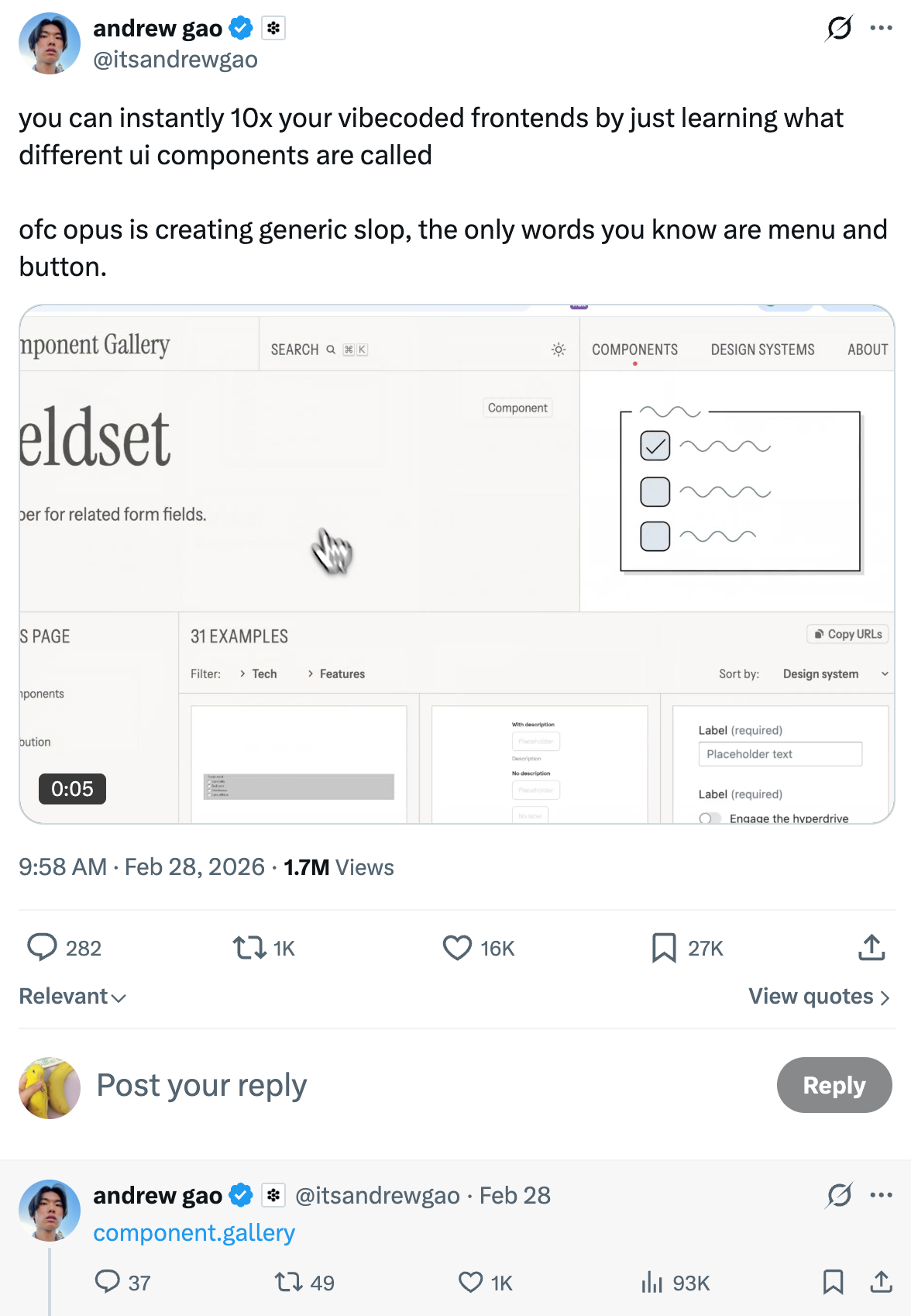
It went viral. Attached was a video of component.gallery, a site that catalogues UI components across design systems, e.g. you can find 14 examples of “treeview”, each from a different design system.
The tweet claimed knowing the right name for a component will boost your vibecoded frontend design greatly. To a lesser degree, it’s true: knowing the basic terminology will get you up to speed in a new field. But you could get the same result by Googling “basic UI design terminology”. And if you’ve worked with UI design for any length of time, you probably already know Mobbin, which organizes real-world app screenshots by screen type, UI element, and user flow — the vocabulary is right there on the homepage.
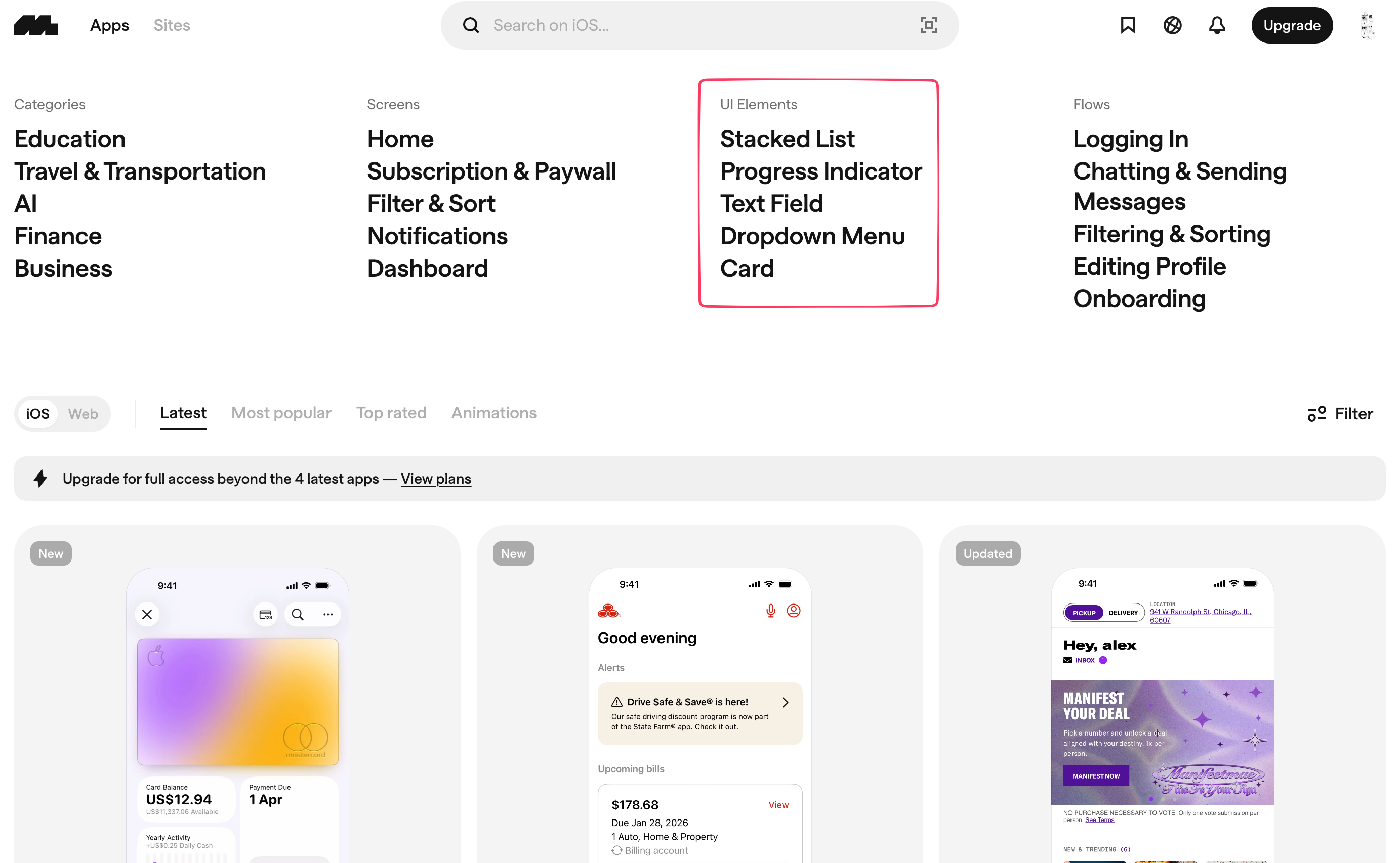
Clicking the text “UI Elements” will give you the entire list:
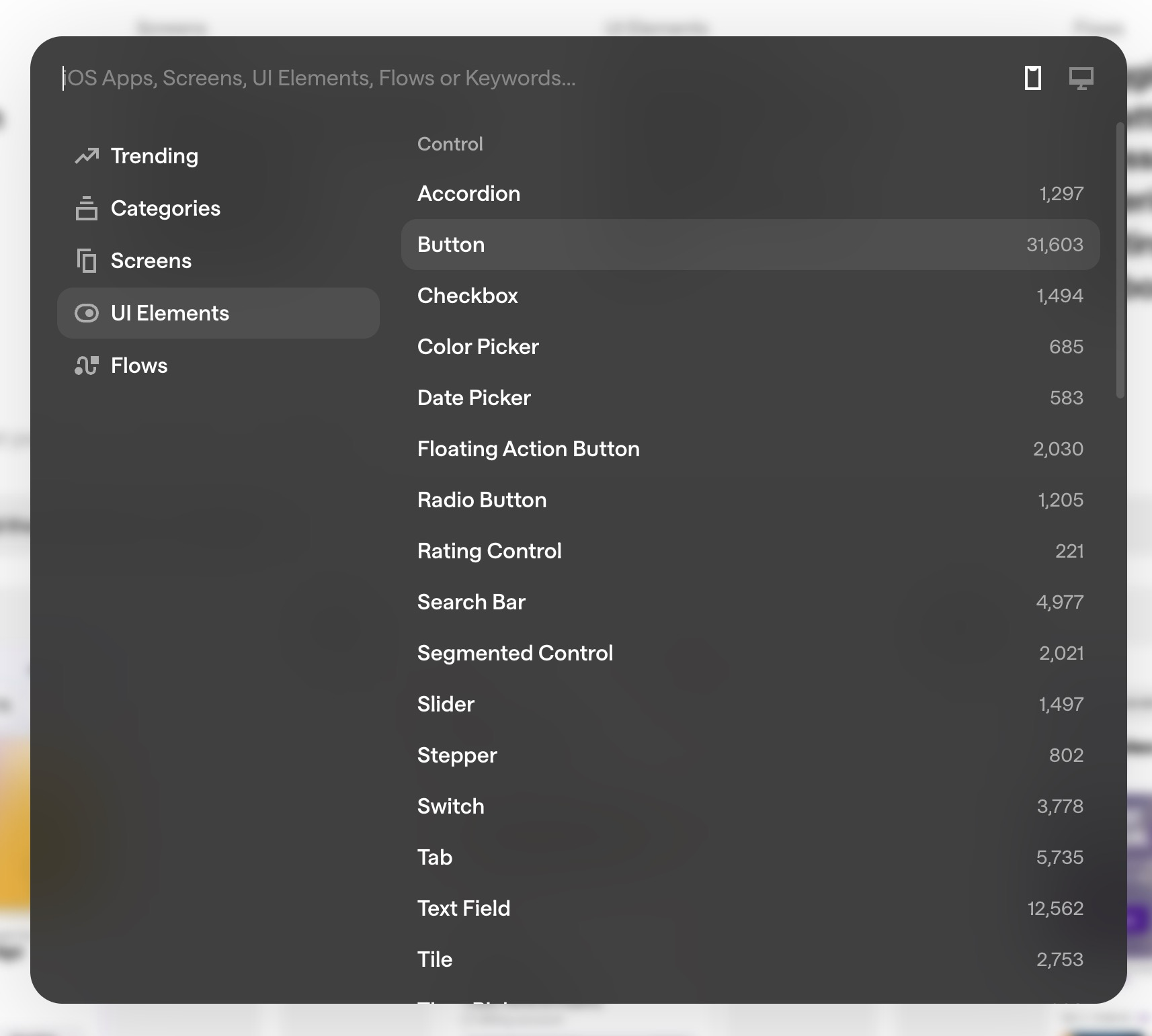
But the tweet didn’t go viral because component.gallery is better than Mobbin. It went viral because of the framing: a UI dictionary for vibecoders that will 10x your output. It validates a pain point people already feel (my AI-generated frontend looks generic) and offers a very simple solution (just learn what things are called).
Plus, most people aren’t very proactive. The tweet wouldn’t have gone viral if people had the instinct to solve the friction themselves. See a component you can’t describe? Screenshot it from a real app, drop it into an AI, ask “What is this called?” That takes 30 seconds and builds the habit of figuring things out (instead of waiting for someone to tell you “you can do this”, and only until then you realize what are possible).
And look at the number of bookmarks (27k, even higher than likes). People are saving this to “use later”, but I bet many won’t. Saving it feels like progress.
As one reply put it:

This pattern repeats everywhere, especially in the self-help and productivity space. Take a basic practice, reframe it as a secret, and watch the engagement roll in.